Men's Skincare
Skincare After Shaving: How I Deal with Razor Bumps
If you’re a guy with sensitive skin, you probably know the feeling: you shave, your face looks clean for an hour, and then the bumps and redness show up.
That’s my number one skin problem. I’m a 24-year-old Korean university student, and the area where I shave gets more breakouts than anywhere else on my face. After shaving, my skin often looks flaky and white in patches, and I’m left with dark shadow marks along my jaw.
This post isn’t written by a dermatologist or a grooming brand. It’s what I actually use, what’s going wrong, and what I’ve changed to fix it. If you’ve read my full Korean skincare routine, this is the shaving part zoomed in.
My Shaving Setup (and What Goes Wrong)
| Item | What I use |
|---|---|
| Razor | Gillette Fusion ProGlide handle |
| Blades | Compatible 5-blade cartridges bought online (Coupang) |
| Lather | Gillette ProGlide Sensitive shave gel (switched from Daiso shaving foam) |
| After shave | My normal morning routine, starting with toner |
Budget matters to me, so I use cheaper compatible blades instead of official refills, and Daiso is the go-to store in Korea for cheap basics.
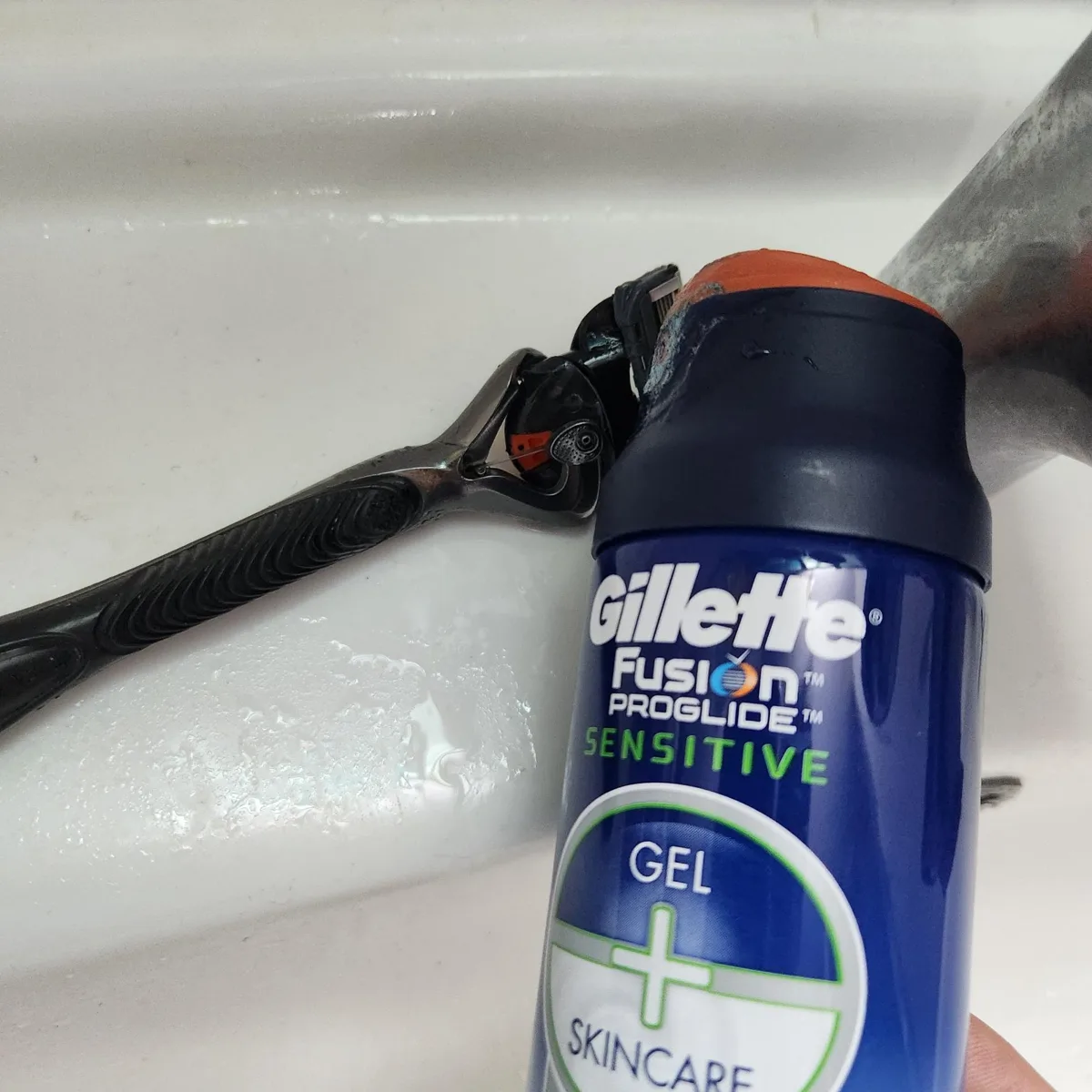
Here’s what I deal with after shaving:
- Breakouts in the shaving area. More than anywhere else on my face.
- White, flaky patches. My skin looks dry and lifted right after.
- Dark shadow marks. If I only shave with the grain (top to bottom), the stubble shadow stays visible.
- Redness. My skin reddens easily, and shaving makes it worse.
That last pair is the classic trap: shaving with the grain is gentler, but leaves shadow. Going against the grain gets closer, but irritates more.
Before, During and After: How I Shave Now
Before: soften the hair
Shaving dry or barely wet skin is one of the most common causes of irritation. I shave every morning, in the shower. I let the warm water soften my stubble for a while first, then put on the gel. I also hold the razor under hot water for a bit before the first stroke.
I used to use cheap Daiso shaving foam, but I’ve switched to a gel made for sensitive skin. Foam can feel airy and dry out fast, while a gel stays slick on the skin for longer.
During: two passes, clean blades
- Go with the grain first. Top to bottom on the cheeks and jaw.
- Then one pass against the grain. That’s how I get rid of the shadow. It’s also the step most likely to cause bumps, so if your skin is more reactive than mine, try going across the grain (sideways) instead.
- Don’t press hard. Let the blade do the work.
- Rinse the blade often and keep it clean. I change my blade every 2–3 weeks and wipe it with rubbing alcohol about every 3 days. If a blade starts tugging before then, change it sooner.
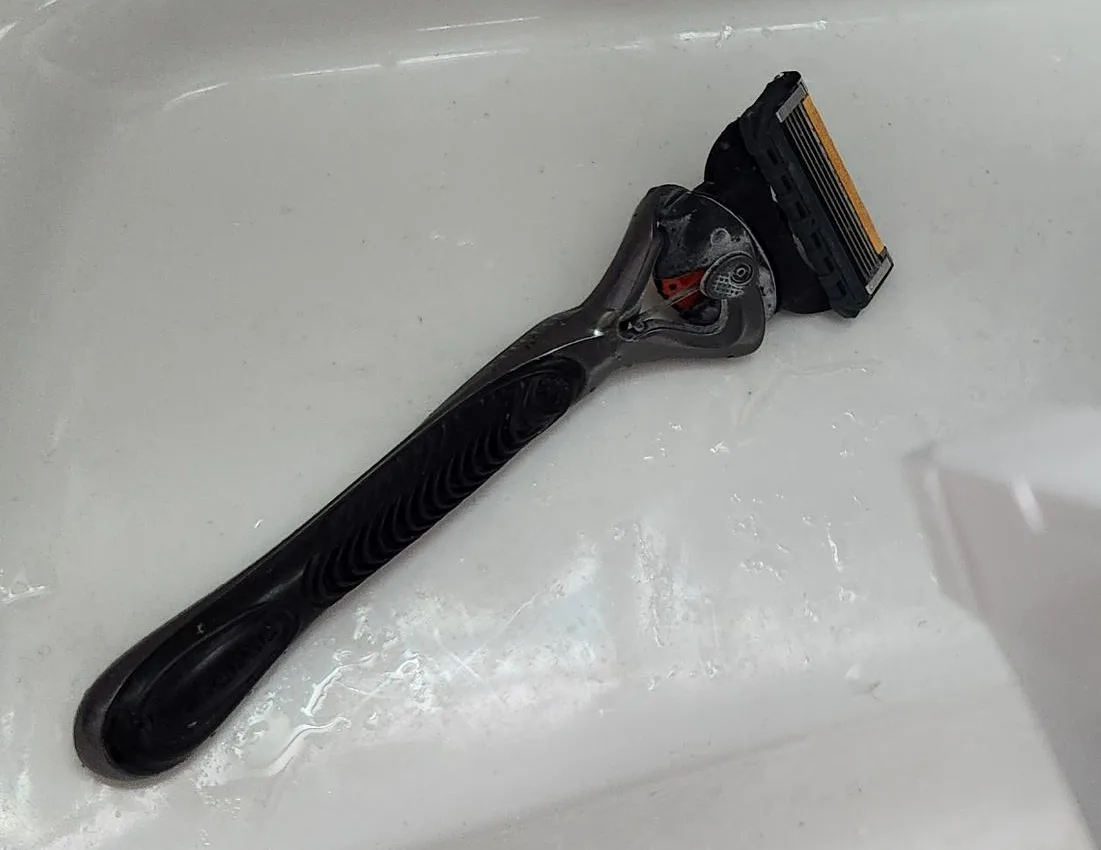
After: calm the skin, then moisturize
This is where my everyday routine helps. After rinsing, I go straight into hydration, because shaved skin dries out even faster than usual for me.
- Toner right away: Round Lab 1025 Dokdo Toner, before the tightness sets in.
- Soothing cream: Bring Green Tea Tree Cica Soothing Cream. Tea tree and cica are the calming combo you’ll see all over Korean drugstores.
- Sunscreen in the morning: freshly shaved skin is more sensitive, so I don’t skip it.
About twice a week, I use a Stridex Sensitive pad (0.5% salicylic acid) at night to help with bumps in the shaving area. Since I shave in the morning, there’s a full day between the razor and the acid. Using an acid right after shaving can sting, so I’d keep the two apart. More on how I use the pads in Exfoliating Pads vs Korean Toner Pads.
What I’m still considering: an electric shaver
I’ve thought about switching to an electric shaver (the Braun Series 5 is on my list) because it doesn’t cut as close and may be easier on reactive skin. I’ve decided to wait for now, so I’ll update this post if I make the switch.
FAQ
Why do I get white, flaky skin after shaving? Shaving scrapes off a thin layer of the skin’s surface along with the hair, so skin that’s already dry can look flaky right after. Hydrating quickly with toner and a moisturizer is the first thing to try.
Should I shave against the grain? It gives a closer shave but irritates more. If you’re bump-prone, start with the grain and only add a careful second pass where you really need it.
Are cheap compatible blades okay? They work for me on a budget. Whatever you use, a dull blade is worse than a cheap one, so replace it before it tugs.
Is aftershave with alcohol a good idea? For sensitive skin, usually not. A hydrating toner and a soothing cream do the calming job without the sting.
This post is based on my personal experience and is not medical advice. If bumps are painful, infected or don’t go away, please see a dermatologist.